- Lower Kabete Rd, Nairobi 00100, Kenya
- Mon-Fri, 08:00am - 06:00pm
- +254 (798) 586113
- info@afriqsilicon.com
3 Min Read

Implementing ERP in African Public Sector: procurement, migration, and sustainability
Learn how to navigate public‑sector ERP procurement cycles, migrate legacy data, and build a sustainable system that stays operational for the long term.


Learn how to navigate public‑sector ERP procurement cycles, migrate legacy data, and build a sustainable system that stays operational for the long term.
Procurement and planning
Public‑sector procurement processes often include a formal request for proposals (RFP) and require an NDA before detailed system information can be shared. The first concrete step is to secure an NDA so you can discuss system diagrams and data models without legal risk.
During the RFP you should ask vendors to provide:
- A clear scope that lists what the ERP will and will not do.
- An architecture diagram that explains how the system will sit on cloud, containers, and databases.
- A timeline broken into two‑week milestones that match your internal review points.
- A cost breakdown that ties each line item to a functional requirement.
These items map directly to the proposal stage in our process, where the scope, timeline, and stack are negotiated before any contract is signed.
Discovery and technical validation
Once the contract is in place, a discovery session led by the engineers who will build the system produces three artefacts:
- A map of all existing applications and data flows.
- A written list of business objectives the ERP must meet.
- An assessment of technical fit, including any third‑party APIs or data migrations that look risky.
If the proposal depends on an unproven integration, say a payment gateway that the ministry has never used, we build a small proof‑of‑concept before the main build starts. This keeps the later timeline predictable and avoids surprise costs.
Legacy data migration
Legacy data migration is a critical part of ERP projects. Best‑practice steps include:
- Assessing each source system to understand the data that will be moved.
- Planning the extraction, transformation, and loading (ETL) approach that fits the target ERP.
- Defining validation checks to ensure data accuracy after migration.
- Documenting the migration plan, including any fallback or rollback considerations.
A well‑defined migration plan should be part of the overall project proposal and reviewed during the discovery phase.
Implementation and system orchestration
With clean data in place, the engineering team stands up the infrastructure using Docker for packaging, GitHub Actions for CI/CD, and Pulumi for infrastructure as code. This ensures the same environment runs in development, testing, and production.
Two‑week sprints deliver functional slices of the ERP:
- Sprint 1: Core financial ledger and chart of accounts.
- Sprint 2: Human resources module with role‑based access.
- Sprint 3: Procurement workflow that matches the ministry’s approval matrix.
Each sprint ends with a demo and a retrospective that feeds directly into the next sprint’s backlog.
The system‑orchestration service includes design and documentation of containers, databases, monitoring, and security hardening so the agency’s own IT team can operate the environment later.
Sustainability and long‑term ops
After go‑live we provide documentation of the architecture and CI/CD pipelines, and we can discuss ongoing support options that suit the agency’s needs.
Checklist for a vendor‑ready ERP RFP
Copy the table below into your procurement document.
| Item | What to ask | Why it matters |
|---|---|---|
| Scope definition | List of included modules and explicit exclusions | Prevents scope creep |
| Architecture diagram | Cloud, container, database, monitoring stack | Shows fit with existing IT policies |
| Migration plan | Outline of data migration approach and risk mitigation | Reduces risk of data loss |
| Sustainability model | Ongoing support, documentation handover | Supports long‑term operation |
| Compliance proof | Alignment with applicable data‑protection regulations | Meets legal and policy requirements |
Use this checklist early; it aligns the RFP with the strategic‑consultancy stage where we help you evaluate build‑versus‑buy decisions and vendor proposals.
If you’re ready to turn your ERP vision into a sustainable reality, talk to our team about it.
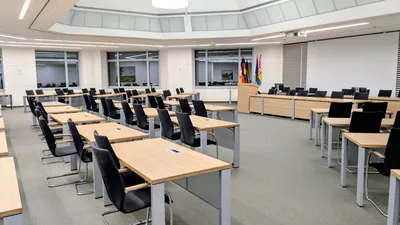
Photo by PICHA Stock on Pexels.
Frequently Asked Questions
Common questions on this topic, answered by the Afriq Silicon team.
What drives the cost of an ERP implementation in a public agency?
Who owns the system once it is live?
What happens if the migration uncovers corrupted legacy data?
Can we reverse a vendor‑selected ERP platform after it’s deployed?
What’s the first concrete step to start an ERP project?
Related Services
Working through this problem? These are the services we offer that connect to it.
Product Design & Implementation
From idea to production-ready software, built right the first time.
Custom software product design and development from Afriq Silicon. We build scalable, user-centered applications, from concept to deployment.
Explore serviceSystem Orchestration
Make your infrastructure invisible, reliably fast, quietly resilient.
IT system orchestration and infrastructure from Afriq Silicon. We design scalable, secure, integrated IT environments for growing organizations.
Explore serviceStrategic Consultancy
Align your technology decisions with your business reality.
Technology strategy consultancy from Afriq Silicon. We help with build-vs-buy decisions, technology selection, vendor evaluation, and digital transformation planning.
Explore serviceRelated
Similar Articles
Stay Informed with Our Latest Articles: Explore the most recent insights, trends, and updates from our industry experts. Dive into a wealth of knowledge to keep you ahead in the ever-evolving tech landscape.
September 21st, 2026
Implementing CI/CD with GitHub Actions to Deploy Docker‑Compose Services
Step‑by‑step guide to set up a GitHub Actions pipeline that builds Docker images, pushes them to a registry and runs docker‑compose on a server, with tips
September 8th, 2026
The real reasons software procurement contracts stall in Kenya and how to fix them
Learn why many software procurement contracts Kenya fail, the clauses that cause risk, and how to embed compliance from day one for public‑sector projects.

June 18th, 2026
Software Development in Kenya: 2026 Buyer's Guide
A market briefing for procurement teams, program directors, and technology leaders considering Kenya as a software delivery base.
June 11th, 2026
Enterprise System Integration in Africa: A Practical Guide
What connecting business systems actually involves in African markets: M-Pesa callbacks, platforms with no API, and designing for the failure path.


Pages
- - Work
- - Services
- - Our Process
- - Contact Us
Solutions
- - Acts ML
- - Kilelehub
- - Other Projects
Legal
Contact
- - Lower Kabete Rd, Nairobi 00100, Kenya
- - Mon-Fri, 08:00am - 06:00pm
- - +254 (798) 586113
- - info@afriqsilicon.com