- Lower Kabete Rd, Nairobi 00100, Kenya
- Mon-Fri, 08:00am - 06:00pm
- +254 (798) 586113
- info@afriqsilicon.com
3 Min Read
Designing Scalable e‑health Platforms for African Institutions
Learn how to build an e‑health platform architecture that scales across Kenya and Africa, integrates insurers, pharmacies and logistics, and stays reliable

Learn how to build an e‑health platform architecture that scales across Kenya and Africa, integrates insurers, pharmacies and logistics, and stays reliable
Designing a scalable e‑health platform architecture for African institutions
A solid e-health platform architecture starts with a clear separation between core clinical services and the surrounding ecosystem of insurers, pharmacies and logistics providers.
Core building blocks
Identify the four layers that any health SaaS must expose:
- Cloud architecture that can span public and private clouds.
- Container orchestration for repeatable deployments.
- CI/CD pipelines that enforce code quality and security hardening.
- Observability stack covering logs, metrics and tracing.
These layers let you replace a single component without pulling the whole system down.
Multi‑tenant tenancy and identity
Tenant isolation patterns
- Database per tenant, easiest to guarantee data residency, but adds operational overhead.
- Schema per tenant, balances isolation and resource usage.
- Shared tables with tenant‑id column, most cost‑effective, requires strict row‑level security.
Choose a pattern that matches your regulatory environment and budget.
Identity and billing
Keycloak can serve as a central identity provider while supporting tenant isolation at the authentication layer. The guide “SaaS Multi‑Tenant Approaches Using Keycloak” explains how to configure realm per tenant or client per tenant, depending on the chosen isolation model.
Integration with insurers, pharmacies and logistics
Integration contracts define the exact request‑response schema, error handling and versioning policy.
- Draft an integration contract for each partner.
- Implement a thin adapter service that translates between the contract and internal APIs.
- Use data migration scripts to back‑fill historic claims.
- Add rollback checkpoints after each batch load.
A common pitfall is assuming all partners will support the same transport protocol; the contract should allow HTTP, gRPC or even file‑drop mechanisms.
Operational resilience for unreliable connectivity
African health networks often face intermittent power and bandwidth. Design for graceful degradation:
- Cache critical reference data locally on edge nodes.
- Queue outbound messages with a durable broker such as RabbitMQ.
- Enable failover to a secondary cloud region using DNS health checks.
The article “Scalable IT Infrastructure What It Actually Takes To Build Systems That Grow With Your Business” shows how to size auto‑scaling groups for bursty demand without over‑provisioning.
Data security and AI‑enabled analytics
Healthcare data must stay encrypted at rest and in transit. Apply security hardening at the container runtime level and enforce least‑privilege IAM roles.
For analytics, a lightweight ML service can run on the same Kubernetes cluster, exposing predictions via a REST endpoint. The ACTS ML platform demonstrates how research scientists can iterate on models without touching production code.
Procurement checklist for e‑health platform projects
Copy the checklist below into your tender document.
- [ ] Does the proposal define a clear **integration contract** for each external partner?
- [ ] Which **tenant isolation** model is used and how does it satisfy data residency rules?
- [ ] Are **CI/CD** pipelines including automated security scans?
- [ ] Is there an **observability** plan covering logs, metrics and alerting?
- [ ] How does the solution handle **failover** and **rollback** under network loss?
- [ ] Does the vendor provide a **runbook** for routine data migration and upgrades?
Answering these questions early reduces the risk of costly re‑work later.
Aligning with African regulatory realities
Regulators often require that patient data never leaves the country of origin. Deploy the database in a region that complies with local data‑residency laws, and keep the encryption keys on-premise or in a sovereign cloud.
When you need to add a new partner, the integration contract approach lets you plug them in without rewriting core business logic.
If you’re wrestling with a stalled health IT project or need a partner that stays for the operating life of the system, let’s talk about how to make your e‑health platform both scalable and sustainable.
Reach out at https://afriqsilicon.com/contact.
Related
Similar Articles
Stay Informed with Our Latest Articles: Explore the most recent insights, trends, and updates from our industry experts. Dive into a wealth of knowledge to keep you ahead in the ever-evolving tech landscape.

June 11th, 2026
Scalable IT Infrastructure: What It Actually Takes
Scalability sounds simple until you need it. Then it becomes the most expensive problem you didn't plan for.

January 4th, 2024
SaaS Multi Tenant Approaches Using Keycloak
A practical guide to implementing multi-tenant SaaS identity management with Keycloak, covering realms, groups, and per-tenant isolation patterns.
November 6th, 2023
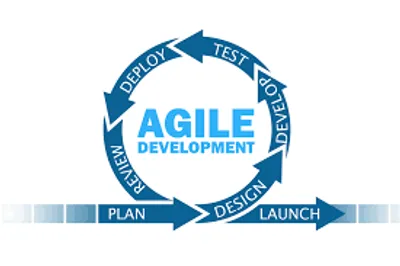
Agile Development at Afriq Silicon
How we actually run two-week sprints, and the deployment pipeline that makes each increment something you can click on rather than a status update.

June 18th, 2026
Software Development in Kenya: 2026 Buyer's Guide
A market briefing for procurement teams, program directors, and technology leaders considering Kenya as a software delivery base.


Pages
- - Work
- - Services
- - Our Process
- - Contact Us
Solutions
- - Acts ML
- - Kilelehub
- - Other Projects
Legal
Contact
- - Lower Kabete Rd, Nairobi 00100, Kenya
- - Mon-Fri, 08:00am - 06:00pm
- - +254 (798) 586113
- - info@afriqsilicon.com